
Introduction
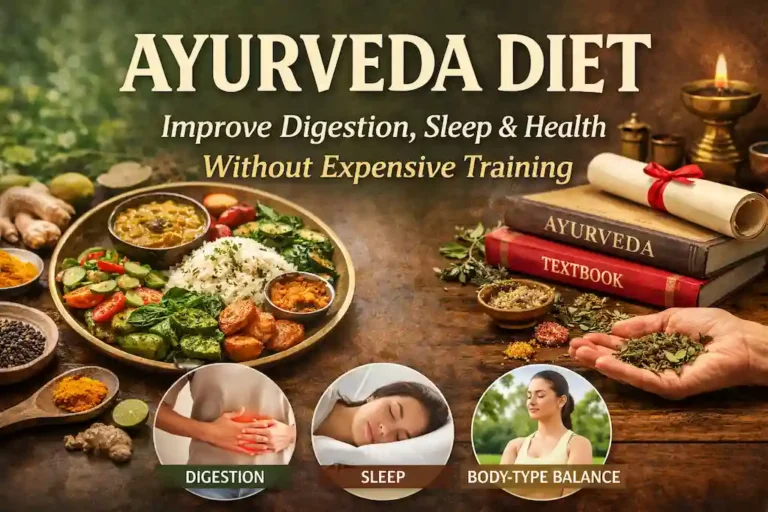
Most people who search for Ayurveda diet are not trying to become clinicians. Instead, they want practical solutions for digestion, sleep, mental clarity, and sustainable daily wellness. At the same time, many are curious about Ayurveda Vata Pitta Kapha body types because they sense their body behaves differently from others. However, when users type “learn Ayurveda,” or “ayurveda courses”, search engines typically show certification programs designed for professional practice.
Consequently, a huge gap has developed. When a person searches for Yoga classes, they are not presented with list of Yoga teacher training programs. But, in Ayurveda, the sister science of Yoga, this gap online has created an adoption issue for Ayurveda. While most can easily book a yoga class and feel well, Ayurveda is presented as a long-term education program with certification, heavy Sanskrit use, concepts and theories, that miss the big picture: Ayurveda is the simples wellness routine that delivers the best results. Yet, people can’t find how it works, how to learn it, and how to apply it in their personal life.
People seeking personal health guidance are redirected toward practitioner education. As a result, many users abandon “learn Ayurveda” and pivot toward “Ayurveda diet” searches because diet feels practical, immediate, and personal. In other words, food becomes the accessible doorway into Ayurveda.
Therefore, understanding the difference between professional training and personal health application is essential. We will discuss below, how anyone looking for Ayurveda diet, is not looking to learn to become a clinician or practitioner, but rather adopt the Ayurveda lifestyle.
Why “Learn Ayurveda” Leads to the Wrong Path
When someone searches “learn Ayurveda,” results usually promote:
• Certification programs
• Institutional diplomas
• Clinical training pathways
• Practitioner licensing tracks
Although these programs are valuable, they are built for treating patients safely and responsibly.
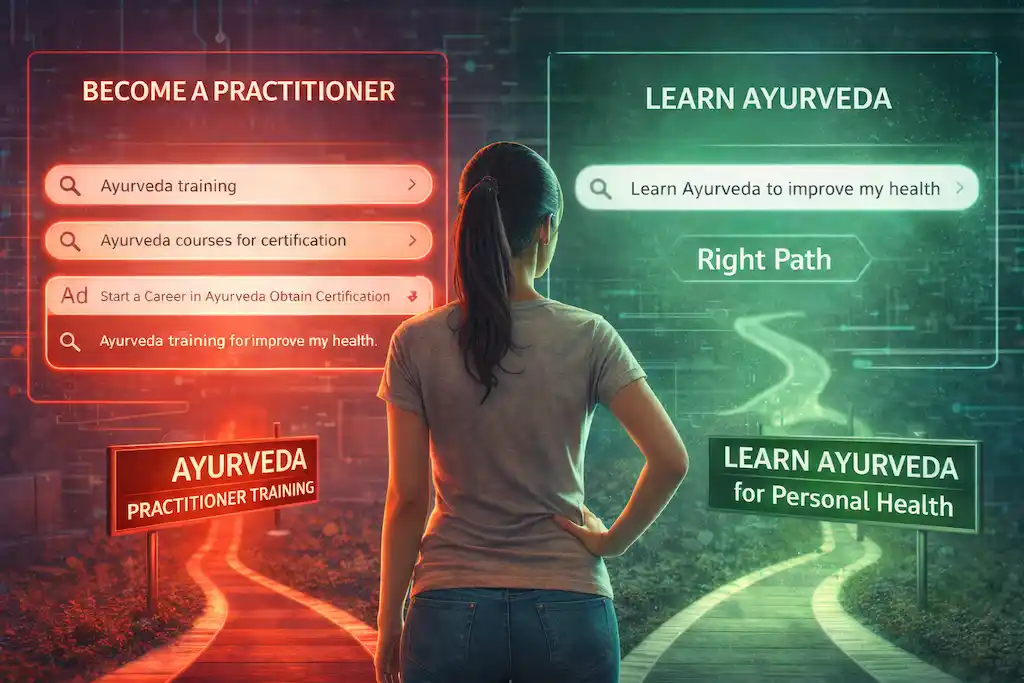
However, the average person is trying to solve everyday concerns:
• Irregular digestion
• Low energy
• Poor sleep quality
• Stress overload
• Mood fluctuations
Thus, a mismatch occurs between intent and results.
Users then search for alternatives like “Ayurveda diet,” hoping to find practical wellness guidance instead of professional coursework.
Ayurveda Training vs Ayurveda for Personal Health
The distinction becomes clearer when comparing goals.
| Professional Ayurveda Training | Personal Ayurveda for Daily Life |
|---|---|
| Clinical diagnostics | Everyday wellness |
| Pulse examination | Food and digestion awareness |
| Disease management | Energy stability |
| Herbal pharmacology | Better sleep routines |
| Panchakarma procedures | Stress reduction |
| Sanskrit medical texts | Practical lifestyle adjustments |
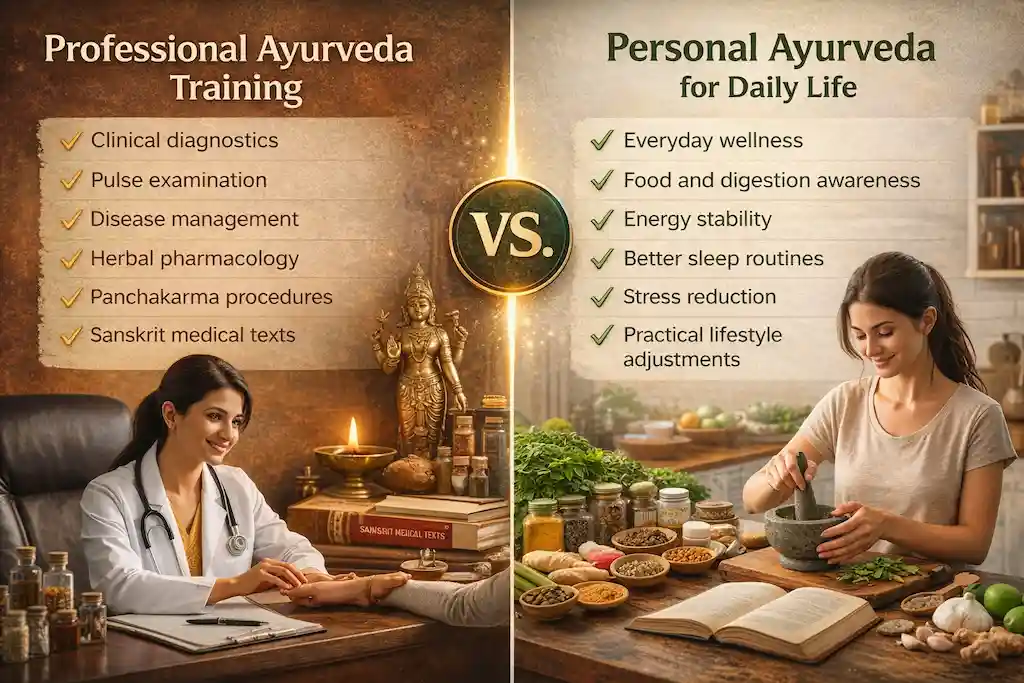
Clearly, professional Ayurveda education prepares clinicians. Conversely, personal Ayurveda focuses on living well.
Most individuals only need the second path.
The Ayurveda Diet as the Practical Entry Point
The Ayurveda diet serves as the most accessible starting point for personal health improvement. Rather than emphasizing calories or restrictive dieting trends, the Ayurveda diet emphasizes how food interacts with an individual’s metabolism.
Specifically, the Ayurveda diet considers:
• Digestive strength
• Food qualities (heavy vs light, warm vs cooling)
• Proper meal timing
• Seasonal adjustments
• Compatible food combinations
Because of this qualitative approach, the Ayurveda diet becomes a personalized nutrition framework rather than a generic plan.
Moreover, people searching for natural health solutions often discover that adjusting the Ayurveda diet produces noticeable improvements without complex interventions.
5. How the Ayurveda Diet Improves Digestion
Digestion determines how effectively the body converts food into usable energy. Therefore, improving digestion becomes the first therapeutic goal.
The Ayurveda diet supports digestion by:
• Favoring warm, freshly prepared meals
• Avoiding incompatible food mixtures
• Supporting consistent meal timing
• Matching foods to digestive capacity
• Reducing processed food burden
As a result, individuals experience:
• Less bloating
• More stable energy
• Better nutrient absorption
• Reduced heaviness after meals
Thus, digestive intelligence becomes the foundation of personal wellness.
How the Ayurveda Diet Supports Better Sleep
Sleep disturbances often originate from metabolic imbalance rather than neurological dysfunction alone. For this reason, the Ayurveda diet helps regulate internal rhythms.
The Ayurveda diet improves sleep by:
• Preventing heavy late-night digestion
• Reducing stimulatory foods
• Supporting hormonal balance
• Aligning meals with circadian cycles
Consequently, the body transitions into deeper rest more naturally.
Furthermore, adjusting the Ayurveda diet frequently improves sleep quality before specialized therapies are necessary.
How the Ayurveda Diet Improves Mental Well-Being
Mental clarity depends heavily on digestive efficiency and nervous system balance. Therefore, dietary adjustments directly influence cognitive performance.
A structured Ayurveda diet helps:
• Stabilize mood fluctuations
• Reduce brain fog
• Improve focus
• Lower stress reactivity
• Support emotional resilience
Additionally, the Ayurveda diet stabilizes the gut-brain connection, which modern research increasingly recognizes as vital for mental health.
The Sattvic Layer of the Ayurveda Diet
A sattvic approach represents the refinement layer of the Ayurveda diet. Specifically, it emphasizes foods that are fresh, light, naturally sweet, and minimally processed.
Sattvic dietary principles promote:
• Mental clarity
• Emotional steadiness
• Reduced nervous system stimulation
• Improved mindfulness practices
Therefore, the sattvic layer enhances the cognitive benefits of the Ayurveda diet without requiring restrictive regimens.
Why Supplements Are Not the First “Natural” Solution
When people search for natural remedies, results usually promote pills and powders. However, Ayurveda takes a food-first approach.
Instead of symptom suppression, the Ayurveda diet addresses root imbalances.
| Supplement Approach | Ayurveda Diet Approach |
|---|---|
| Targets symptoms | Targets root causes |
| Often temporary relief | Sustainable balance |
| External intervention | Internal regulation |
| Adds complexity | Simplifies habits |
Hence, correcting the Ayurveda diet often reduces the need for supplemental solutions.
Ayurveda Diet Personalization Through Ayurveda Vata Pitta Kapha Body Type Understanding
Every body processes food differently. Therefore, personalization becomes essential.
The Ayurveda Vata Pitta Kapha framework categorizes metabolic patterns that influence how individuals respond to foods.
| Body Pattern | Dietary Emphasis |
|---|---|
| Vata body type | Warm, grounding meals |
| Pitta body type | Cooling, calming foods |
| Kapha body type | Light, energizing meals |
Understanding Ayurveda Vata Pitta Kapha helps tailor the Ayurveda diet to individual physiology. Consequently, dietary adjustments become more effective and sustainable.
Moreover, awareness of Ayurveda Vata Pitta Kapha body types allows individuals to recognize patterns in digestion, energy, and mood. Rather than following generic advice, people adapt the Ayurveda diet according to their constitutional tendencies.
Lifestyle Rhythms That Support the Ayurveda Diet
Food works best when aligned with daily biological rhythms.
Practices like dinacharya and a supportive daily routine strengthen the benefits of the Ayurveda diet.
The daily routines are specific to the body types (doshas):
Supportive habits include:
- Consistent waking times
- Morning hydration rituals
- Structured meal timing
- Evening wind-down practices
- Technology reduction before sleep
When lifestyle rhythms complement the Ayurveda diet, improvements become more sustainable.
Why People Keep Searching for Workarounds
Many users initially type “learn Ayurveda” but encounter practitioner-level material. Consequently, they feel overwhelmed and look for alternatives.
Common workaround searches include:
• Ayurveda diet
• Natural digestion remedies
• Foods for better sleep
• Natural stress solutions
These searches reveal that users are not abandoning Ayurveda. Instead, they are trying to find a practical pathway focused on personal health rather than professional certification.
Living Ayurveda vs Practicing Ayurveda
The difference between application and profession is significant.
You do not need clinical training to benefit from Ayurveda principles.
Personal application focuses on:
• Understanding doshas
• Recognizing body type patterns
• Improving digestion
• Adjusting food habits
• Supporting consistent routines
Professional practice, by contrast, requires diagnostic responsibility and advanced therapeutic knowledge.
A Structured Path for Personal Ayurveda Learning
Modern platforms now bridge the educational gap by organizing Ayurveda into practical learning pathways.
One example is CureNatural, which focuses on personal application rather than practitioner certification.
Structured guidance helps individuals:
• Follow a personalized Ayurveda diet
• Understand Ayurveda Vata Pitta Kapha patterns
• Take a reliable Ayurveda dosha test
• Build sustainable lifestyle habits
• Strengthen digestion naturally
This approach restores Ayurveda to its original purpose: supporting daily living.
Final Takeaway
Most people searching “learn Ayurveda” are directed toward professional programs. However, most individuals simply want practical ways to improve digestion, sleep, energy, and mental clarity.
Therefore, the journey should begin with the Ayurveda diet and personalized lifestyle guidance rather than practitioner training.
For those seeking a structured starting point, CureNatural’s Core Ayurveda Series provides a five-course pathway designed specifically for personal health application.
Ultimately, one path builds a profession, while the other builds lasting wellness.
Choose the path aligned with your goal.
References
Ayurveda & Holistic Health Promotion
Patwardhan, B., Gautam, M., & Tillu, G. (2015). Ayurveda for health promotion: An overview. Journal of Ayurveda and Integrative Medicine (JAIM).
→ Highlights Ayurveda’s role in promoting total health and well-being, not just clinical treatment.
Ayurvedic Diet & Nutrition Principles
Srinivasan, K. (2016). Exploring Ayurvedic knowledge on food and health for contemporary wellness. Journal of Ayurveda and Integrative Medicine (JAIM).
→ Describes Ayurveda’s emphasis on ahara (food) as a central pillar of health.
Personalized Nutrition & Body Types (Ayurveda Diet)
MedlinePlus. (2023). Ayurvedic diet plans: Vata, Pitta, and Kapha doshas. Medical News Today.
→ Explains how dietary planning varies by dosha patterns, supporting the personalized aspect of Ayurveda diet.
Ayurveda Medicalisation & Practice Trends
Patwardhan, B., & Mutalik, G. (2017). Ayurveda and medicalisation: Understanding modern shifts in traditional systems. Journal of Ethnopharmacology.
→ Peer-reviewed discussion on how Ayurveda’s traditional holistic focus is increasingly shaped by clinical frameworks.
 Google