
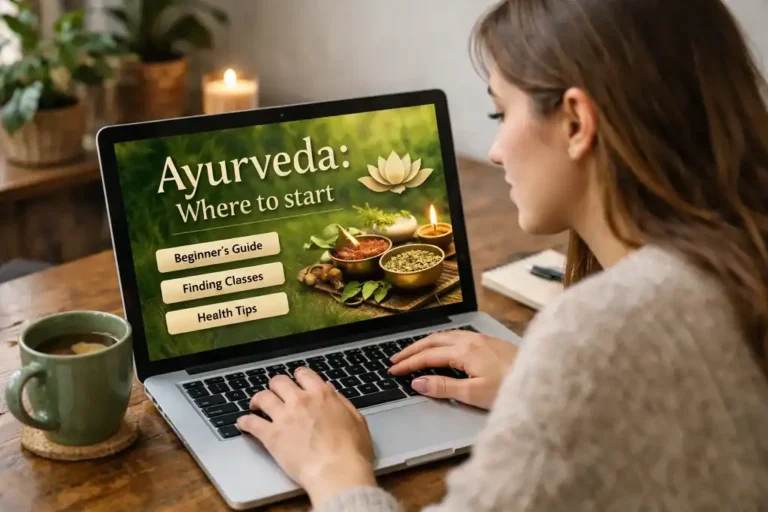
Ayurveda can feel complex at first. Between unfamiliar terms and thousands of search results, even beginners can feel like they’re already behind. But the truth is: Ayurveda for beginners doesn’t have to be overwhelming—or expensive.
In fact, it’s possible to begin exploring Ayurveda at home using structured, free online resources—as long as you follow the right approach. This guide breaks down how to begin, what to avoid, and how to build clarity without spending thousands.
Before You Begin: What Type of Beginner Are You?
Not every beginner wants the same thing from Ayurveda. Ask yourself:
Do you want to apply Ayurveda to your personal life?
Or are you curious about becoming a practitioner someday?
This choice determines how—and how deeply—you should start learning.
| Your Goal | What to Focus On |
|---|---|
| Personal healing | Daily routine, food choices, digestion, lifestyle adjustments |
| Future practice or certification | Foundational theory, diagnostic logic, Sanskrit terminology |
If you’re unsure, begin with personal application. It builds lived experience—and reveals whether deeper study is right for you later.

How to Learn Ayurveda Online Free — Without Getting Lost
Yes, there are free ways to start. But they’re often scattered, incomplete, or too focused on theory without daily relevance. Here’s what works—and what doesn’t.
✅ Best Free Resources for Beginners
Blogs and Articles – Like this one. Look for topics like doshas, daily routine, digestion, and food energetics.
YouTube Videos – Search for basic Ayurveda cooking, self-care, and morning rituals.
Podcasts – Great for passive learning and stories from real practitioners.
- Free Intro Courses– Great for passive learning and stories from real practitioners.
These give you a taste of Ayurveda without the pressure. But they’re not a complete system.
⚠️ Why Most Free Learning Fails
No structured order — hard to know where to start or what comes next
Conflicting information — especially with food lists and imbalance guidance
No tools for daily practice — just concepts, not application
Too much Sanskrit or academic tone for everyday learners
That’s why most beginners give up—not because Ayurveda is too hard, but because free learning lacks clarity.
The Smarter Alternative: Structure First, Then Explore
A small investment in structure can go further than endless free resources. Think:
A guided mobile app that gives you a personalized plan
A low-cost beginner course that explains the core concepts clearly
A framework that makes future free exploration more effective
Once you know what Prakriti, Agni, and Ama mean—and why they matter—every blog, video, or podcast becomes 10x more useful.

 Google