
LOGIN
| SIGN-UP
| MY ACCOUNT
| CART
| SIGN-OUT
CureNatural logo black
  • Home
  • Learn
  • Consult
  • Mobile App
  • Blog
  • Contact
    • Contact Us
    • FAQs
    • About Us
  • Media
    • Magazines & Journals
    • News and PR
    • Blog Mentions
  • ⠀
  • Get My Body’s Blueprint
  • Home
  • Learn
  • Consult
  • Mobile App
  • Blog
  • Contact
    • Contact Us
    • FAQs
    • About Us
  • Media
    • Magazines & Journals
    • News and PR
    • Blog Mentions
  • ⠀
  • Get My Body’s Blueprint
Study Ayurveda

Ayurvedic Certification Online: What It Really Takes to Become a Certified Ayurvedic Practitioner

  • December 9, 2025
  • Coms 0
Ayurvedic certification online

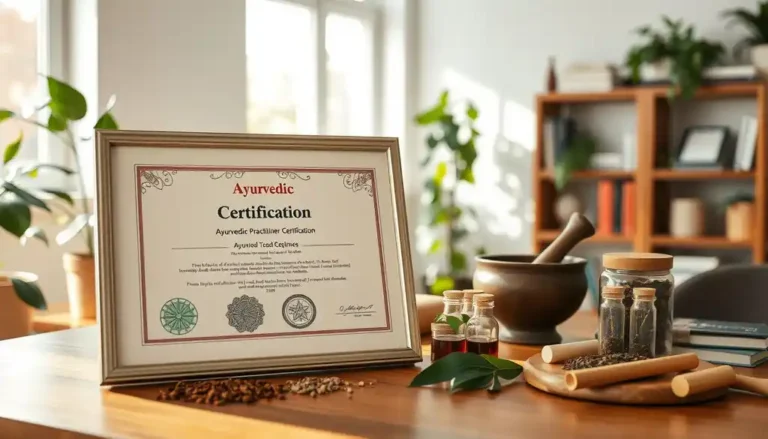
Becoming an Ayurvedic practitioner isn’t a weekend wellness hobby — it’s a serious, medical-adjacent commitment that requires real study, real discipline, and, yes, sometimes real cultural shock. With interest in holistic medicine rising, many people search for Ayurvedic practitioner certification, Ayurvedic practitioner certification online, and guidance on how to become a certified Ayurvedic practitioner. But the truth is: what you see online barely scratches the surface of what Ayurvedic training actually involves.

Ayurvedic Practitioner Certification Levels

The Reality: True Ayurvedic Education Still Lives in India

If you want deep, traditional, clinically grounded Ayurveda — the kind where you understand pathology, disease management, tissue metabolism (dhatu theory), pharmacology (dravyaguna), and diagnostic methods — the gold standard is still the India-based Ayurvedic education centers.

These centers offer tiered programs depending on who you are:

  1. Physicians from the U.S. or other countries
    → Often placed into fast-track or advanced modules because they already understand anatomy, physiology, and clinical reasoning.

  2. Health-adjacent professionals (nutritionists, nurses, massage therapists, yoga teachers)
    → Enter a mid-level track — not quite beginner, not yet advanced.

  3. General wellness seekers with no medical background
    → Start with foundational Ayurveda concepts before moving into diagnostic or therapeutic training.

A typical Ayurvedic practitioner course in India lasts at least three months, but true depth often requires six months to a year of additional study. That’s the minimum education needed to responsibly assess someone’s prakriti-vikriti, identify imbalances, perform visual diagnosis, and prescribe diet-lifestyle corrections without accidentally creating a digestive disaster.

What a Practitioner Actually Learns

Forget the Instagram version of Ayurveda — real training includes:

  • Tongue reading (color, coating, texture, cracks, moisture)

  • Pulse assessment (3-finger, 7-levels, subtle qualities)

  • Nail and skin analysis

  • Understanding body constitution (prakriti) and current imbalance (vikriti)

  • Diet planning and nutritional therapeutics

  • Basic herbal selection and simple formulation

  • Lifestyle prescriptions, daily routines, seasonal routines

This level of knowledge requires structured, progressive study. And here’s the blunt truth: the real medical pieces — disease management, Ayurveda pharmacy, deep dhatu. (tissue) pathology — are NOT realistically accessible to general practitioners in the U.S. unless they already possess clinical training.

The Cultural & Language Challenges of Training in India

This is the part no one tells you in their glossy “study Ayurveda abroad” brochures.

When you train in India:

  • You live on campus, often in ashram-style arrangements.

  • You eat Ayurvedic vegetarian food cooked on site — no meat, no coffee runs, no DoorDash relief.

  • Nearby restaurants (if they exist) rarely offer a Western diet.

  • Sanskrit terminology is everywhere — doshas, srotas, agni, dhatus, dravya, rasa, virya, vipaka.

  • India’s traffic, crowds, noise, and sensory overload can break even seasoned travelers.

Many students hit a wall. Some leave within weeks. Others have emotional meltdowns because their bodies and minds aren’t used to the environment, the food, or the cultural expectations. It’s not “Eat Pray Love.” It’s immersive medical training with chanting and digestive cleansing.

Training in the United States: Possible but Pricey

There are Ayurveda schools in the U.S. that offer practitioner certification. Some even go deep. But:

  • Programs typically cost tens of thousands of dollars

  • The curriculum may vary widely

  • Some teachers are traditional but not clinically trained

  • Others are knowledgeable but expensive

  • Depth is limited unless you already know anatomy, physiology, or differential diagnosis

This creates a huge problem: people want to learn Ayurveda, but they don’t yet know whether they’re ready for the investment, intensity, or cultural immersion.

Why Online Ayurveda Courses Are the Smart First Step

The smartest path for most people — before flying to India or dropping $20k — is to start with structured Ayurvedic certification online programs that teach the fundamentals in an accessible, modern way.

But online courses vary wildly:

  • Some are taught by people with no clinical background

  • Some rely heavily on Sanskrit terminology that overwhelms beginners

  • Some lack structure, visuals, or clarity

  • Some feel like reading a textbook from the 1600s while someone chants in the background

This is exactly why CureNatural designed its courses differently.

How CureNatural Makes Ayurveda Learnable

CureNatural built online Ayurveda courses specifically for:

  • People who want to understand Ayurveda before investing heavily

  • Students who want clear, visual, step-by-step instruction

  • Learners who don’t want Sanskrit dumped on them from day one

  • Busy professionals who want digestible modules, not overwhelming theory

CureNatural courses use:

  • Professional voice-over instructors

  • Built by M.D. who studied in India in a Gov of India Green-Leaf Certified Ayurvedic Hospital
  • High-quality visuals and diagrams

  • Easy, modern explanations of classical concepts

  • Optional references to Sanskrit terms when needed

  • Accompanying eBooks and tables that reinforce key ideas

  • Certification upon request, so your study hours can be applied toward recognized Ayurvedic associations in the U.S.

This gives future practitioners a “test drive” before committing to the full practitioner pathway.

So How Do You Become a Certified Ayurvedic Practitioner?

Here’s the honest roadmap:

  1. Start with online foundational study
    → Learn concepts, test your interest, build vocabulary.

  2. Decide whether you want to practice clinically
    → If yes, expect a year or more of training.

  3. Determine whether you want U.S.-based or India-based certification

  4. Prepare for cultural, dietary, and language adjustments if studying in India.

  5. Budget realistically
    → U.S. programs = expensive
    → India = more intense lifestyle requirements

  6. Confirm recognition
    → Ensure your future school or association accepts your online hours (CureNatural provides documentation for this).

In short: Ayurveda is worth studying — but it demands commitment.

FAQ

What is the first step to becoming a certified Ayurvedic practitioner?

First, learn the basics of Ayurveda. This includes understanding the three doshas, diet, and lifestyle. Start with online courses from programs like CureNatural.

What are the different levels of Ayurvedic certification?

There are various levels, like Health Counselor, Practitioner, and Doctor. Knowing US standards and bodies like NAMA is key.

Is clinical training necessary to become a certified Ayurvedic practitioner?

Yes, clinical training is crucial. Online courses teach theory, but practical skills need in-person training, mainly in India.

What are the challenges of studying Ayurveda in India?

Studying in India has cultural and practical hurdles. You must follow a strict vegetarian diet and learn Sanskrit. Adjusting to campus life is also a challenge.

Can I become a certified Ayurvedic practitioner through online certification programs?

Online programs teach theory, but they’re not enough. Practical experience is needed. Look for local programs or clinics for hands-on training.

What are the benefits of getting certified through a U.S.-based Ayurvedic practitioner certification program?

U.S. programs, like those accredited by NAMA, offer specializations. They can lead to good careers. But, they’re expensive and time-consuming.

How do I create a step-by-step path to becoming an Ayurvedic practitioner?

Plan your learning, find mentors, and observe clinics. Building a practice portfolio is also key for credibility.

What is the importance of certification for professional association recognition?

Certification is important for professional recognition. It boosts your credibility and career chances.

How can I start my Ayurvedic education as a beginner?

Start with online courses from programs like CureNatural. They’re beginner-friendly and avoid Sanskrit jargon.
Tags:
Ayurveda training programAyurvedic practitioner certificationCertified Ayurvedic professionalHolistic wellness educationOnline Ayurvedic courses
Share on:
Astringent Taste Food: Why This Overlooked Ayurvedic Flavor Is the Key to Lightness, Clarity & Better Health
Comparing Ayurveda Training Programs in the U.S. vs Kerala (and the smartest path for most people)

Leave a Reply Cancel reply

Your email address will not be published. Required fields are marked *

Search

Categories

  • Ayurveda Cooking (4)
  • Ayurveda Gut Health (7)
  • Ayurveda Remedies (3)
  • Ayurveda Seasons (1)
  • Ayurvedic Case Study (1)
  • Ayurvedic Constitution (6)
  • Everyday Ayurveda (5)
  • Six Tastes in Ayurveda (3)
  • Study Ayurveda (12)
  • Yogic Diet (3)
ayurveda consultation banner

Tags

Ancient healing foods Ayurveda Diet Ayurveda Education Ayurveda herbs for testosterone Ayurveda nutrition Ayurvedic approaches Ayurvedic daily routine Ayurvedic Diet Ayurvedic Digestive Health Ayurvedic lifestyle tips Ayurvedic Principles Ayurvedic remedies Ayurvedic studies Balanced Nutrition Digestion support Digestive health Digestive System Health Digestive system support Grounding Foods Gut healing Healing practices Healthy living Healthy metabolism Herbal medicine Holistic Wellness Hormonal balance techniques Kapha dosha Metabolism boosting foods Mind-body balance Mind-body connection Mindful Eating Natural Healing Natural vitality boosters Online Learning Pitta-balancing Pitta dosha Testosterone-boosting remedies Traditional Medicine Practices Traditional testosterone methods Vata Dosha Vitality-enhancing practices Warm Meals Ways to reduce heaviness Yoga for digestion Yoga poses for gut health
CureNatural White Logo

Transforming lives through holistic wellness education.

Download Ayurveda App
  • Download Apple App
  • Download Google App
Media Coverage
  • Magazines & Journals
  • News & Press
  • Influencer Blog Mentions
Download Ayurveda App
  • Home
  • Courses
  • Consultation
  • Ayurveda Mobile App
  • Learn Ayurveda Blog
  • List Item
Account
  • Cart
  • My Account
Download Ayurveda App
  • Ayurveda FAQ
  • Contact us
  • Terms & Conditions
  • Privacy Policy
  • Refund & Cancellations
  • Delete Account Policy
Dosha Test
Sign In
Sign in with Google Google
Sign up with Google Google
or sign in with email
The password must have a minimum of 8 characters of numbers and letters, contain at least 1 capital letter
I agree with the privacy policy Privacy Policy
Remember me
Sign In Sign Up
Restore password
Send reset link
Password reset link sent to your email Close
Confirmation link sent Please follow the instructions sent to your email address Close
Your application is sent We'll send you an email as soon as your application is approved. Go to Profile
No account? Sign Up Sign In
Lost Password?
CureNatural Logo