
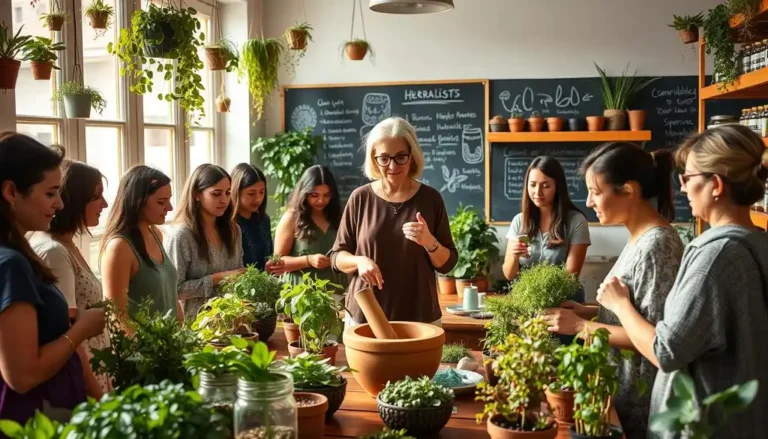
If you’re looking for a more natural, practical way to care for your health—or help others—you’re not alone. Interest in herbalism courses online has grown as more people look for trusted, plant-based healing options that go beyond symptom management.
But for many, herbalism for beginners feels like a maze of scattered blogs, home remedies, and half-finished online tutorials. One course teaches plant identification. Another dives into chemistry. And many herbalist classes focus on Latin names and extraction methods but leave out how to use herbs in real life.
That’s why it’s essential to ask not just what you’re learning—but how you’ll apply it, and who the herbal remedies are meant for. This is where most herbalist courses fall short, and where Ayurveda offers something far more complete.
In this article, we’ll explore how most herbalism education works today, where it often fails beginners, and why learning Ayurveda as a foundation for herbal practice may be the most intelligent path forward.
Whether you’re exploring herbalism out of personal curiosity or considering professional certification later on, this guide will help you start with clarity—and depth.
🌱 What Is Herbalism? (and What Does a Herbalist Do?)
At its core, herbalism is the study and use of plants for healing. For thousands of years, people across cultures have turned to herbs to ease digestion, support immunity, calm the mind, balance hormones, and strengthen the body. It’s one of the oldest systems of wellness—and still one of the most accessible.
But today, herbalism looks very different depending on where and how you study it.
Most herbalism for beginners programs teach how to identify plants, understand their active compounds, and prepare them as teas, tinctures, or salves. Some go deeper into botany or the biochemistry of herbs, while others emphasize traditional Western herbalism or even clinical practice.
So, what does a herbalist do, exactly?
A trained herbalist might:
Create herbal formulas for common issues like sleep, digestion, or stress
Recommend herbs to support seasonal transitions or immune resilience
Grow and harvest medicinal plants
Guide others in building a home apothecary
Educate clients about safe, sustainable herbal use
Work in wellness shops, health coaching, or alongside naturopaths
However, it’s important to know that herbalist courses vary widely. Some are highly scientific. Others are folk-based. Many focus on what a plant does, but not who it’s best suited for.
And this is where most modern herbalism training misses something essential—personalization.
Herbs aren’t one-size-fits-all. Just because turmeric is anti-inflammatory doesn’t mean it’s right for every person or situation. That’s where Ayurveda—the ancient system of individualized healing—adds depth, safety, and real-world effectiveness to herbal learning.
Let’s explore why.
📚 The Traditional Herbalist Path Today
If you’re curious about working with herbs professionally or simply want to deepen your skills, you’ve probably wondered: How do people become herbalists today?
The truth is, there’s no single route—but several popular paths have emerged, especially in North America and online. Whether you’re just beginning or wondering how to become a certified herbalist, understanding the options helps clarify what kind of training actually fits your goals.
📖 Books & Self-Guided Study
Many people start with books—some classic, others newly popular. Authors like Rosemary Gladstar and Michael Tierra have made herbalism for beginners more accessible than ever. But while books offer great theory and insight, they often lack practical, hands-on experience and mentorship.
🌿 Apprenticeships
Traditional apprenticeships give aspiring herbalists a deep, immersive education. You work alongside a seasoned practitioner, learning to harvest, process, and formulate remedies from scratch. This is one of the most authentic ways to learn—but opportunities can be hard to find and may not follow a structured curriculum.
💻 Online Herbalist Courses
The rise of online herbalist courses has completely changed how and where people learn. Now, anyone can begin their herbal journey from home, often with flexible pacing, video tutorials, and community support.
Some of the most popular herbalist classes online cover:
Plant identification
Medicinal properties of common herbs
Herbal preparation techniques (infusions, tinctures, salves, syrups)
Safety guidelines, contraindications, and dosage
Seasonal wellness and immune support
Online platforms like The Herbal Academy, Chestnut School of Herbal Medicine, and even newer integrative programs now offer multi-level options—ranging from introductory to advanced.
🎓 Herbalist Certification Programs
If you’re wondering how to become a certified herbalist, know that there’s no single governing board in the U.S. that licenses herbalists the way doctors or nurses are licensed. However, reputable herbalist programs do offer certificates of completion, which can help build credibility—especially if you plan to start a practice or add herbalism to your wellness business.
Most herbalist certification courses take anywhere from a few months to two years, depending on the depth and delivery format.
But even with all these options, most of today’s training models focus on what an herb does—not who it’s right for.
This lack of nuance can lead to generic advice and one-size-fits-all remedies—exactly where most people go wrong with herbalism.
In the next section, we’ll explore the hidden gap that Ayurveda fills—and why every herbalist, coach, or health seeker benefits from understanding it.
🌱 Herbalism for Beginners: What to Expect From Entry-Level Learning
When most people begin exploring herbalism, they picture something simple, grounding, and empowering — crafting herbal teas from chamomile, making a salve from calendula, or learning to soothe a sore throat using ginger and honey. This intuitive, kitchen-based approach is the heart of herbalism for beginners, and it’s often what draws students in.
You’ll likely start with:
Common culinary herbs like rosemary, thyme, turmeric, and peppermint
Basic DIY herbal remedies for digestion, sleep, stress, or minor wounds
Herbal first-aid techniques and how to stock a basic home apothecary
Introductory herbalist classes that explain how to identify and safely use medicinal plants
It’s exciting… until it isn’t.
Where Beginners Often Get Stuck
While herbalism seems straightforward at first, many newcomers quickly run into a few common frustrations:
1. Information Overload
There’s an avalanche of herbal info online — blog posts, YouTube videos, courses, and forums. But too much information, without guidance, creates confusion instead of clarity. One site says “use this herb for sleep,” while another warns against it. Who do you trust?
2. Confusing Terminology
From “demulcent” and “carminative” to “tinctures,” “menstruums,” and “percolation extraction”—herbalist courses often dive into technical language fast. For true beginners, this can feel intimidating and discouraging.
3. No Real-World Context
Many herbalism for beginners courses teach long lists of plants and properties, but don’t explain when, why, or for whom a particular herb is right. Without personalized application or a system to follow, students feel like they’re memorizing disconnected facts instead of learning holistic healing.
This is where Ayurveda makes all the difference — by offering a complete framework to understand how herbs interact with your body type, digestion, and imbalance. It helps you move from generic herbal knowledge to personalized, practical healing.
🧩 The Problem: Modern Herbalism Ignores the “Who, When, and Why”
Most herbalist courses and herbalist classes today do a good job teaching what to use — you’ll learn that turmeric is anti-inflammatory, that aloe soothes, and that neem purifies. But few programs teach for whom, when, or why these herbs should be used.
And that’s a major problem.
Let’s look at a few examples that highlight this missing link:
Turmeric + Neem + Aloe: A common “anti-inflammatory” combination — and a potent one. But all three are bitter, light, and cooling. For a Vata-type person (naturally dry, cold, and light), this trio can worsen imbalances, leading to more dryness, gas, or anxiety.
Bitters for Pitta: Bitter herbs are often recommended to “cool” fiery Pitta constitutions. But if a Pitta person also has dryness or weak digestion (a common modern issue), piling on more bitter and dry herbs can backfire — resulting in poor appetite, fatigue, or even emotional burnout.
Cold Herbs for Kapha: Cooling, heavy herbs like licorice or marshmallow may be soothing, but in a Kapha body type (which tends to be slower and denser), they can further dull digestion and contribute to mucus buildup or sluggish metabolism.
⚠️ Without Personalization, Herbalism Can Do More Harm Than Good
Herbs aren’t neutral — they carry qualities, and those qualities interact with your own. Without understanding those dynamics, even the most “natural” remedy can push you further out of balance.
Unfortunately, herbalism for beginners courses often skip this critical nuance. You’re taught what an herb does biochemically — but not how it behaves energetically, or how it should be adapted based on:
The person’s constitution (Vata, Pitta, Kapha)
The time of day or season
The presence of an imbalance (dryness, inflammation, heaviness, etc.)
The method of preparation (tea, powder, oil, paste, etc.)
🌿 Why Ayurveda Changes the Game
This is exactly where Ayurveda fills the gap.
Ayurveda teaches herbalism not as an isolated subject, but as part of a complete healing system — where every herb is understood by its taste, energy, post-digestive effect, qualities, and most importantly, its impact on the individual.
It doesn’t just tell you what’s “good for inflammation.” It tells you who it’s good for, when to use it, how to prepare it, and what to combine it with for synergy or balance.
And that’s what makes Ayurvedic herbal education so powerful — and so essential — especially for beginners who don’t just want to memorize herbs, but want to truly understand and use them safely.
🌿 Ayurvedic Herbalism: The Missing Link in Modern Herbal Education
If you’ve ever felt that herbalism courses or herbalist classes gave you information but not confidence, you’re not alone.
That’s because most modern herbalism is taught as a list of herbs and their actions — without teaching context. But Ayurveda teaches that context is everything.
In Ayurvedic herbalism, you don’t just ask what herb to use. You ask:
Who is the person? What is their mind-body constitution (Vata, Pitta, Kapha)?
What imbalance is present? Is it cold, hot, dry, damp, heavy, light?
What is the season, time of day, or stage of life?
What is the proper form of delivery? (Tea, oil, paste, powder, decoction…)
How should the herbs be combined for synergy — or to prevent aggravation?
🍃 Understanding the Qualities (Gunas) of Herbs
Each herb has specific qualities — light/heavy, dry/oily, heating/cooling. Ayurveda teaches you to match (or oppose) these qualities based on the individual’s needs, not just the condition.
For example:
Triphala isn’t just “a digestive.” It’s balancing for all three doshas only when used correctly — the dose, form, and timing can make it either cleansing or nourishing.
Neem is purifying, but too cold and bitter for someone with weak digestion or excess dryness.
Ashwagandha is rejuvenating — but not ideal for a fiery Pitta person in the heat of summer.
🧪 Ayurvedic Preparations Are Just as Important as the Herbs Themselves
Modern herbalist training often teaches herbs in isolation. But Ayurveda emphasizes method of preparation, which can completely change how an herb acts.
Some classical Ayurvedic forms include:
Kwatha (Decoction): Boiled teas for hard herbs like roots or barks
Phanta (Hot infusion): Quick steeping method for soft herbs like flowers
Lepa: Topical paste for skin or musculoskeletal issues
Churna: Dried powders mixed with honey, ghee, or warm water
Sneha (Medicated Oils or Ghee): For internal or external use
Gutika (Herbal Pills): For more potent, long-lasting effects
These methods aren’t just traditional — they are functional, adjusting potency, delivery, and targeting.
🌱 Ayurveda Adds the “Why” to Herbalism
Most herbalist courses teach what a plant contains — alkaloids, flavonoids, antioxidants. But Ayurveda teaches what a plant does — and for whom, when, and how.
It’s not just about turmeric being anti-inflammatory. It’s about how turmeric’s bitter and astringent nature makes it drying, and how it should be taken with ghee or milk to buffer that — especially for Vata or Pitta types.
This is where Ayurvedic herbalism shines: it bridges the science of herbs with the energetics of the human system.
🌿 Why Ayurveda Is the Best First Herbalism Course You Can Take
If you’re exploring herbalist courses or already browsing different herbalism classes, you might be asking:
“Where do I start? Which path gives me the strongest foundation?”
The answer is clear: start with Ayurveda.
🔍 Ayurveda Is More Than Herbalism — It’s a Complete System
Most herbalism for beginners programs focus only on the herbs. But Ayurveda gives you an entire framework:
Diagnostic tools like Doshas (body types), Agni (digestive fire), and Ama (toxicity)
Daily lifestyle integration — so herbalism is not just a remedy, it’s a routine
Personalized protocols — no more one-size-fits-all advice
Preventive focus — treat imbalances before they become illness
Connection to nature — by season, stage of life, and emotional state
Ayurveda doesn’t compete with Western herbalism or modern science. It organizes it.
That’s why so many students who start with isolated herbalist classes eventually come back to Ayurveda — because they need something to hold it all together.
🌱 If You Only Learn One System — Make It the One That Connects Them All
Herbs. Food. Lifestyle. Mind. Spirit.
Other herbalism courses might teach you what herbs do — but Ayurveda teaches you why, when, and for whom.
Whether you’re:
Exploring herbalism for beginners
Wanting to build your own home apothecary
Or starting your path as a holistic healer
Start with the one system that teaches you how to think like a traditional practitioner — while applying it in your modern life.
🧠 Ready to Learn?
Start your journey with CureNatural’s Ayurveda Online Courses — or dive into practical healing with our Home Remedies and Farmacy Course, where you’ll actually make and use your own herbal formulas.

 Google