

People search pitta body type or pitta dosha chracteristics when they recognize something in themselves. The strong drive. The sharp focus. The feeling that you run “hot,” even when everyone else seems fine.
If you also searched pitta dosha characteristics, you are probably looking for something more grounded than social media posts that either glorify intensity or make it sound like a problem. Ayurveda treats Pitta as neither. It treats it as a force. Useful when balanced, costly when pushed too far.
What Pitta Controls in the Body
A clear way to understand the pitta body type (or dosha in sanskrit) is to start with what Pitta controls.
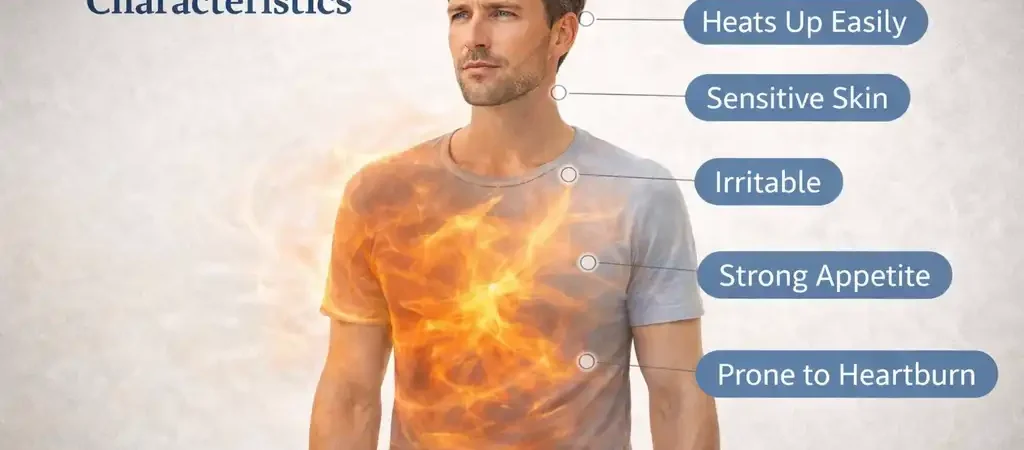
Pitta is linked with digestion and metabolism. It is also linked with the kind of intelligence that breaks things down, judges what matters, and tries to improve what is not working. That is why many pitta dosha characteristics descriptions mention strong appetite, strong focus, and a strong “inner heat.” The spread of this inner heat, that Pitta generates the most of, can lead to inflammation. Hence, much of Pitta dosha management revolves around inflammatory control.
Pitta dosha characteristics on the physical level can include an average build with a more muscular tendency, a flatter abdomen, tanner or warmer-toned skin, and skin that reacts faster, such as redness or rashes. This is according to the birth blueprint for Pitta body type (known as prakriti), but it can change due to food choices, lifestyle, and other factors.
Think of it like a built-in engine. When it runs well, things process smoothly. When it runs too hard, it can start to feel like friction inside the system.
How Pitta Shapes Personality and Drive
A lot of people identify with the pitta body type through behavior first.
Pitta often shows up as leadership, precision, and ambition. You might like clear goals. You might dislike wasted time. You might feel calmer when things are organized and moving forward.
This does not mean “Pitta people are better.” It just means the system naturally leans toward intensity and results. Many pitta dosha characteristics are really descriptions of how a person responds to pressure. Some people speed up. Some people shut down. Pitta often tries to take control and solve.
When Fire Works and When It Burns
Fire is a useful image for the pitta body type, but it needs context.
Productive heat looks like steady digestion, clear thinking, and confident action. It helps you finish what you start. It helps you make decisions.
Destructive heat is different. It feels like you cannot turn off. You get irritated faster. You feel impatience with people who move slowly. Even rest can feel like a waste of time. Many pitta dosha characteristics lists hint at this, but they often miss the main point. Pitta is not “bad.” Overdrive is the problem.

Your pitta body type isn’t the problem. Overdrive is.
Early Signals of Excess Pitta
Excess Pitta usually does not arrive as a dramatic event. It often creeps in.
Early signals can show up before burnout and before bigger inflammation patterns. You might notice more heat in your body. You might notice more sharpness in your mood. You might notice that small annoyances feel bigger than they should.
These are not meant to scare you. They are meant to build awareness. The value of learning pitta dosha characteristics is catching the drift early, when it still feels like “something is off,” not “something is wrong.”
Why Modern Achievement Culture Feeds Pitta
Modern achievement culture is basically a Pitta workout.
Hustle rewards intensity. Competition rewards comparison. Pressure rewards speed. Even wellness can become a performance sport, where you try to “win” at sleep, diet, and productivity.
So it makes sense that the pitta body type is common in high performers. The environment is built for it. The problem is that the same environment rarely teaches how to cool down without feeling like you are losing.
This is why many educated searchers go beyond “type” and look up pitta dosha characteristics. They can feel the costs of overdrive, even if they are still successful on paper.
Why Cooling Is Not Just About Food
When people hear “Pitta,” they often jump straight to food rules. Cooling foods. Avoiding spicy foods. That can turn into a checklist fast.
But cooling is not only about food. It is also about regulation. How you handle pressure. How you handle deadlines. How you handle the need to be right. How you handle rest when your mind wants to keep working.
That is where deeper learning helps. If you want a clear, grounded way to understand your pitta body type, and the real pitta dosha characteristics behind it, my Pitta Dosha Management Course is built to go beyond surface descriptions and into pattern recognition.
References:
Healthline: What Are the Ayurveda Doshas? Vata, Kapha, and Pitta Explained
FAQs: Pitta Dosha Explained: Fire, Focus, and the Cost of Overdrive
How would you describe a pitta body type in plain language?
What do people mean by pitta dosha characteristics?
Where does Pitta show up most in the body?
When does Pitta feel like a strength?
What’s a subtle sign that Pitta is running too hot?
Why does modern work culture trigger pitta dosha characteristics?
Are physical pitta dosha characteristics real, or just stereotypes?
What’s the next step if I strongly relate to the pitta body type?
Dr. Amit Gupta, M.D.
Dr. Amit K. Gupta, MD is a Harvard- and Boston University–trained physician dedicated to bridging modern clinical medicine with the ancient wisdom of Ayurveda. He founded CureNatural to make Ayurveda clear, personalized, and credible. His work focuses on digestion, daily routine (dinacharya), and metabolic balance—using practical food and lifestyle guidance you can actually follow.
Over more than 25 years in health promotion, he received the U.S. DHHS Secretary’s Award for innovations in disease prevention and contributed patented work that helped lay the foundation for Health Savings Accounts (HSAs).