

When Pitta imbalance shows up, it can feel like your system runs “too hot”—your patience gets shorter, your body feels more reactive, and your usual routine suddenly stops working. The good news is that Pitta balance is absolutely possible, and once you understand what drives imbalanced Pitta, the path forward becomes much clearer. However, most people try random fixes that accidentally worsen Pitta imbalance, which is why a simple, Ayurveda-aligned plan matters.
What Is Pitta Imbalance in Ayurveda?
In Ayurveda, Pitta is the dosha linked with transformation and intensity. So when Pitta dosha gets imbalanced, the first clue is often “too much”—too much heat, too much urgency, or too much reactivity in the body and mind. That said, Pitta balance isn’t about “doing nothing.” Instead, it’s about learning what cools and steadies imbalance of Pitta dosha so your system can return to a calmer, clearer baseline.
Common Signs of Pitta Imbalance
Imbalance in Pitta dosha tends to show up in patterns. For example, you might notice irritability before physical discomfort—or the other way around.
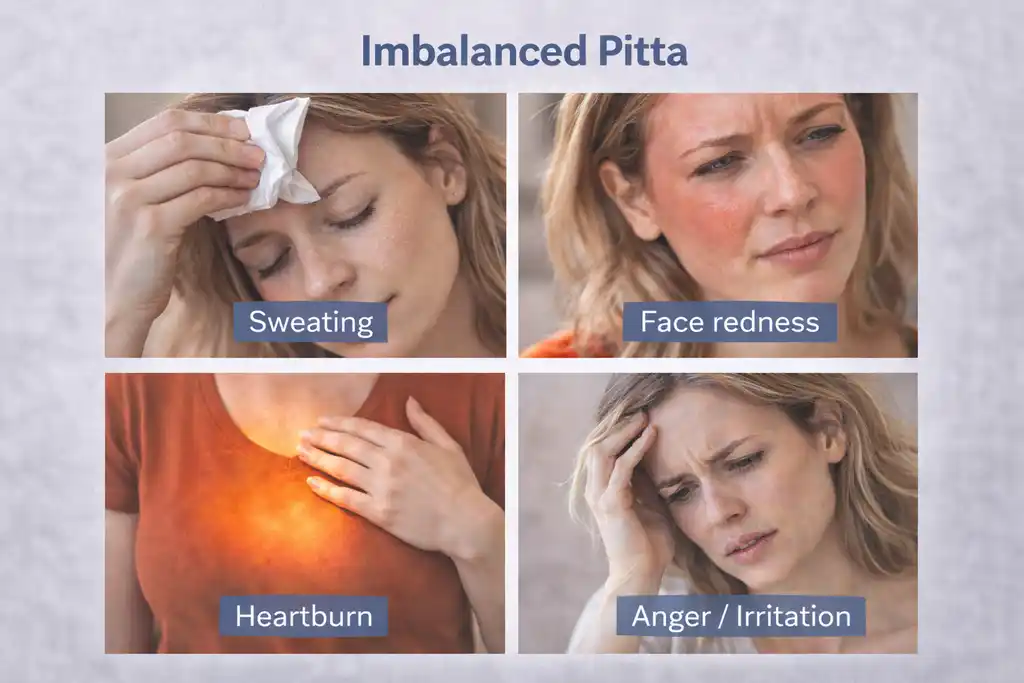
Some common experiences associated with imbalanced Pitta include:
Feeling more irritable, impatient, or easily frustrated
A sense of “overheating” or running hot more often
Reactive digestion or feeling “too acidic” at times
Skin sensitivity, redness, or flare-up tendencies
Trouble unwinding at night even when tired
Feeling mentally “on” and driven, even when it backfires
Becoming more critical of yourself or others
Heat sensitivity, especially in warmer seasons
Feeling better briefly… then getting triggered again
Even if only a few of these resonate, it can still point to Pitta dosha imbalance. Meanwhile, the goal is not perfection—it’s building Pitta balance in a way you can actually sustain.
What Causes Pitta Imbalance?
Pitta imbalance usually isn’t random. More often, it builds through a few predictable triggers—especially when they stack over time.
Lifestyle patterns that increase Pitta
High pressure schedules, constant performance mode, competitive environments, and not enough downtime can all nudge you toward imbalanced Pitta. Additionally, long workdays without real decompression can make Pitta imbalance feel even more intense.
Diet patterns that aggravate Pitta
Eating in a rushed state, relying on highly stimulating foods, or pushing the body with extremes can contribute to imbalance for some people. However, the best path to Pitta balance depends on your unique baseline—because what feels “healthy” for one person can backfire for another.
Seasonal and environmental factors
Hot weather and high-heat environments often amplify Pitta qualities. As a result, Pitta imbalance may feel more noticeable during warmer months—or during periods of intense demand and expectation.

Is This Your Prakriti or Your Vikriti?
Here’s the key conversion truth: not every Pitta trait means you have a Pitta issue. Sometimes it’s your natural constitution, and other times it’s a temporary shift that needs correction. Therefore, identifying whether you’re seeing Pitta dosha imbalance (vikriti) versus your baseline can save you months of trial-and-error and speed up Pitta balance.
Take the Ayurveda dosha test to check your prakriti and vikriti and pinpoint whether imbalanced Pitta is truly the driver behind what you’re feeling.
How to Restore Pitta Balance Without Overcomplicating It
The fastest way to rebuild Pitta balance is to stop chasing random tips and start following a simple, consistent direction. In other words, think “cooler and steadier,” not “more intense and strict.”
Here are the high-level pillars that commonly help reduce imbalances in Pitta dosha:
1) Choose calmer rhythms
Consistency tends to calm imbalance in Pitta. For instance, predictable meal timing and intentional recovery time often matter more than pushing harder for results.
2) Prioritize cooling choices daily
Small daily inputs add up. Likewise, when your system feels reactive, soothing choices can support Pitta balance more than big, occasional “resets.”
3) Reduce intensity strategically
Less friction can mean more relief. Consequently, building a few intentional downshifts into your day can help soften Pitta dosha imbalance without requiring a total lifestyle overhaul.
4) Personalize your approach
A real Pitta balance plan matches your constitution, your season, and your stress load. That’s why generic advice can be frustrating—because Pitta imbalance is often context-dependent.
If you’re still learning your foundation, exploring your ayurvedic body type and the doshas and elements can help you see why certain habits affect you more strongly than others.
Pitta Daily Routine to Prevent Imbalanced Pitta
If Pitta imbalance keeps returning, it’s often because your day runs on intensity without enough cooling recovery. The solution isn’t complicated—it’s consistent. That said, the right routine is specific, and it should be tailored to your tendencies and triggers.
A typical Pitta routine focuses on reducing friction and supporting steadier energy throughout the day. That means choosing habits that feel sustainable, building in decompression time, and learning which “heat triggers” set you off—so you can protect Pitta balance without feeling restricted.
For a clear starting point, visit the guide on Pitta daily routine (and notice how a few targeted shifts can support Pitta balance faster than you’d expect).
Next Step: Fix the Root of Pitta Imbalance (Not Just the Symptoms)
If this felt familiar, you don’t need more random tips—you need a targeted method that fits your constitution and your real life. Therefore, once you confirm what’s actually causing Pitta dosha to get imbalanced, you can stop guessing and start building a balanced and structured approach to resolving the imbalance.
If you’re ready to correct the imbalance in Pitta dosha with a proven, step-by-step system, explore my Pitta Dosha Course—designed specifically to help you restore Pitta balance.
References
Sharma, H., Chandola, H. M., Singh, G., & Basisht, G. (2007). Utilization of Ayurveda in health care: An approach for prevention, health promotion, and treatment of disease. The Journal of Alternative and Complementary Medicine, 13(9), 1011–1019.
 Google